
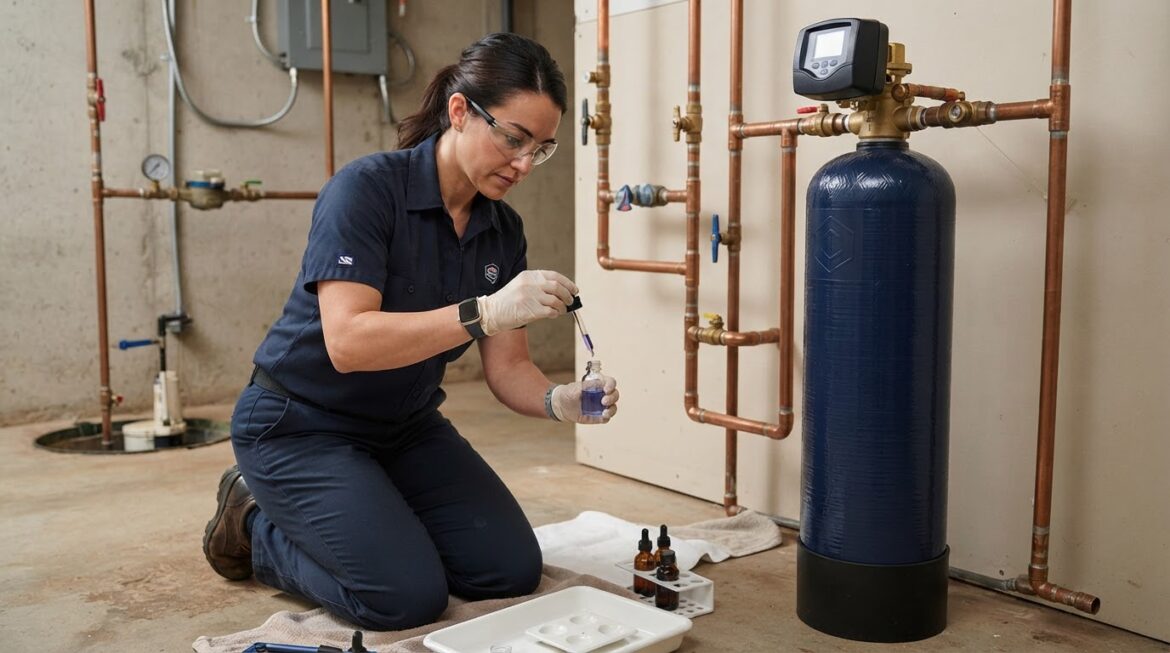
Installing a water softener should noticeably reduce the hardness of the water delivered through the treated plumbing system. But what happens when mineral deposits continue appearing on shower doors, faucets and fixtures—or a water test still indicates significant hardness?
The problem is not necessarily defective equipment. Incorrect programming, plumbing configuration, excessive flow, regeneration problems and even the way water is tested can affect apparent performance. At Pro Filtration Water Systems, we approach these problems through testing and system diagnostics rather than immediately recommending equipment replacement.
How Do You Know Whether Your Water Softener Is Working?
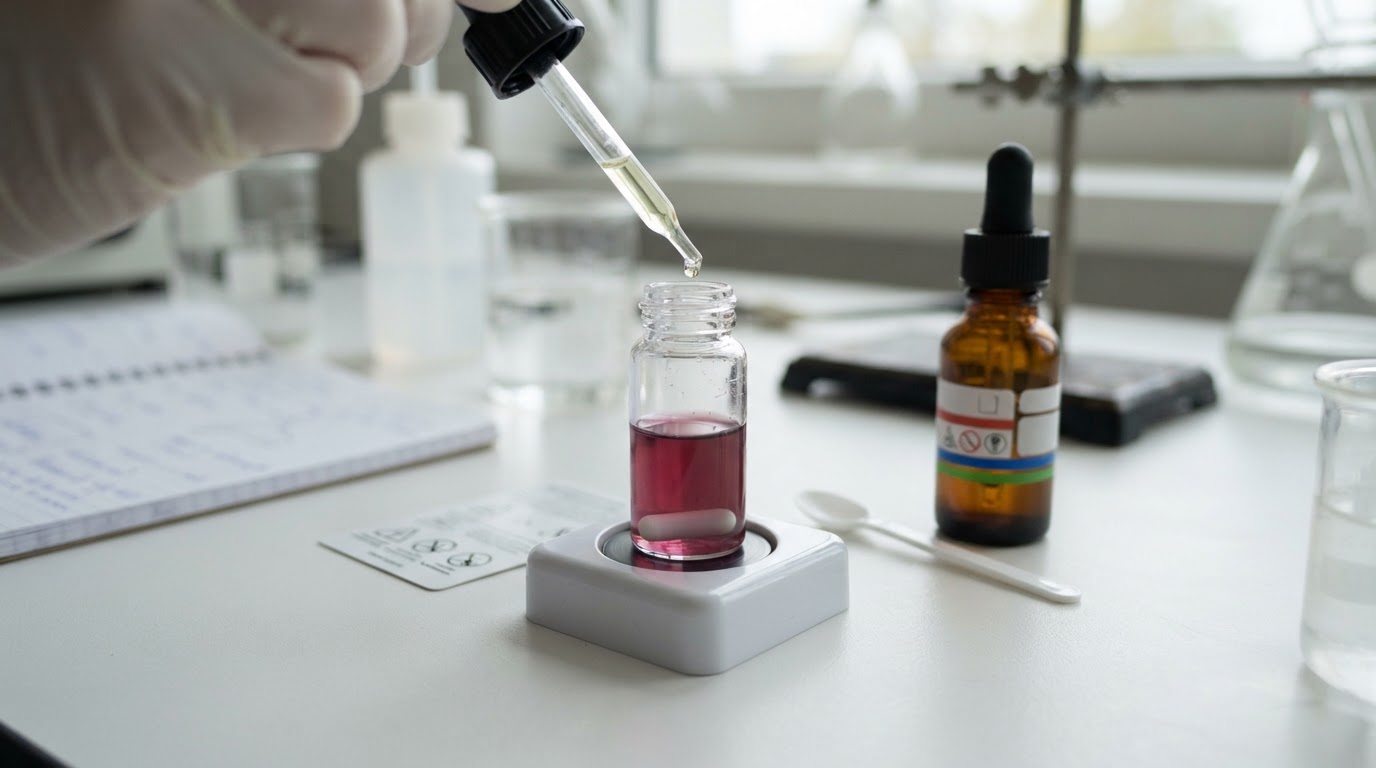
The most reliable starting point is to measure hardness before and after the softener using an appropriate hardness test. Conventional ion-exchange softeners reduce calcium and magnesium concentrations by exchanging these ions for sodium or potassium ions. Hardness is commonly expressed in grains per gallon (gpg) or milligrams per liter as calcium carbonate (mg/L as CaCO₃). One gpg is approximately 17.1 mg/L as calcium carbonate.
| Sampling location | Measured hardness |
|---|---|
| Incoming untreated water | 15 gpg |
| Immediately after softener | 0 gpg, within test resolution |
| Bathroom cold-water faucet | 5 gpg |
These hypothetical results suggest the softener is reducing hardness at its outlet under the tested conditions, but untreated water may be reaching the bathroom through another plumbing connection. Sampling conditions and test accuracy should also be verified. Replacing the softener without investigating the plumbing could leave the original problem unresolved.
1. The Water Softener Is in Bypass Mode
Most residential softeners have a bypass valve that allows untreated water to continue supplying the home while equipment is serviced. If the bypass remains open to the untreated-water path, some or all household water may avoid the resin bed. This can happen after installation, maintenance or unrelated plumbing work. A partially positioned or internally leaking bypass can also allow untreated water to mix with softened water.
What to check: Verify the bypass position according to the valve manufacturer’s instructions and compare hardness immediately upstream and downstream.
2. The Hardness Setting Is Incorrect
Metered softeners use programmed hardness and available treatment capacity to estimate when regeneration is necessary. If programmed hardness is lower than actual incoming hardness, the controller may overestimate how much water the resin can treat, resulting in breakthrough before regeneration. Incoming hardness can also change over time.
What to check: Measure incoming hardness and review programmed hardness, resin capacity, salt dose and reserve settings together. These parameters should be coordinated rather than adjusted independently.
3. The Softener Is Undersized for the Household
Sizing involves two separate engineering considerations: treatment capacity and hydraulic service flow. Capacity determines how much hardness the resin can remove between regenerations. Service flow describes the rate of water passing through equipment under specified operating conditions. A system may have sufficient daily capacity but be poorly suited to peak demand. Simultaneous showers, a bathtub filler and other fixtures can increase instantaneous flow substantially. Depending on resin, vessel and conditions, excessive service flow can contribute to pressure drop and hardness leakage.
What to check: Review resin volume, control valve, plumbing diameter, measured flow and manufacturer performance specifications. Larger equipment is not automatically the solution.
4. The Brine Tank Is Not Supplying Enough Salt Solution
Ion-exchange resin must be regenerated periodically. The control valve introduces concentrated salt solution from the brine tank into the resin bed. Incomplete regeneration can result from a salt bridge, salt mush, restricted injector or brine line, incorrect refill settings, or a malfunctioning brine valve or float assembly. A tank that appears full of salt may not be preparing and drawing brine correctly.
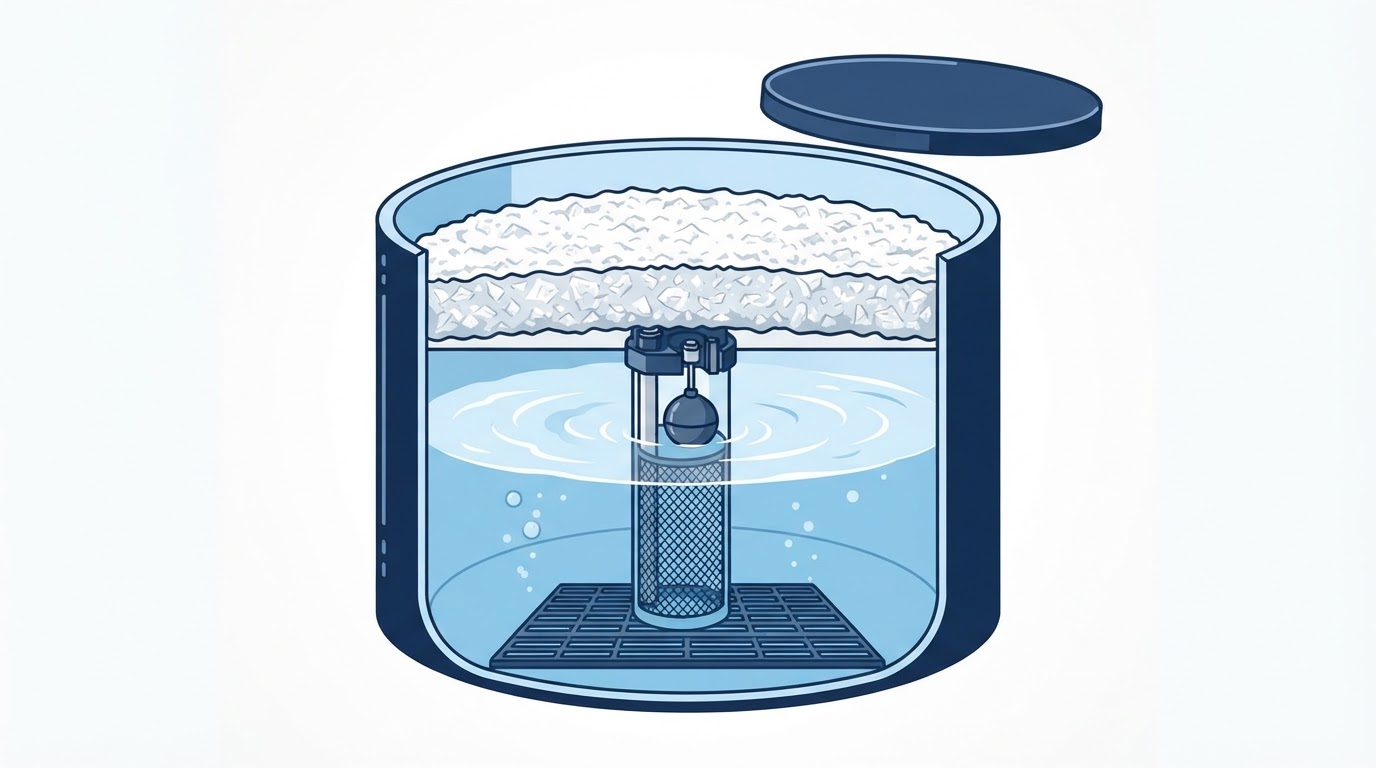
What to check: Inspect the brine tank and verify actual brine draw and refill. Do not repeatedly initiate manual regeneration without identifying the underlying problem. See also why a water softener may use too much salt.
5. Untreated Water Is Mixing With Softened Water
The location of the softener within the plumbing is as important as the equipment itself. Properties may have multiple supply branches, older modifications, irrigation connections, separate water-heating arrangements or bypass loops. A softener on only one branch may not treat every expected fixture. Some systems also use intentional blending valves to achieve a selected residual hardness.
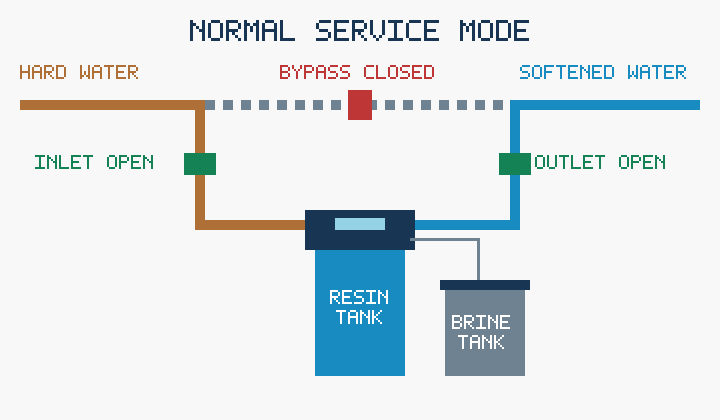
What to check: Trace distribution plumbing, verify which fixtures are treated, and inspect blending or bypass connections. A leaking or partially open bypass may allow untreated water to mix with softened water.
6. The Resin Has Become Fouled or Deteriorated
Resin performance can deteriorate because of iron or manganese fouling, suspended material, oxidant exposure, unsuitable operating conditions or normal aging. Some problems may respond to manufacturer-approved cleaning; others require resin replacement. Do not replace resin simply because mineral spots or unexpected hardness readings appear.
What to check: Evaluate resin condition, incoming chemistry, regeneration and outlet hardness. Where appropriate, upstream whole-house water filtration may address specific conditions affecting resin performance, such as disinfectant exposure.
7. The Water Heater Still Contains Previously Untreated Water
After installation, plumbing and a storage water heater may still contain untreated water. Stored water progressively mixes with and is replaced by softened water through normal use. Existing deposits do not disappear immediately.
What to check: Compare cold-water hardness directly after the softener with hot-water hardness at fixtures after normal turnover. If the difference persists, investigate the water heater supply and plumbing configuration.
8. Water Spots or TDS Readings Are Being Mistaken for Hardness
A softener does not remove all dissolved substances. Evaporation can leave residues even after successful softening, and these are not necessarily calcium carbonate scale. A conductivity-based TDS meter cannot establish hardness removal. Because softening exchanges calcium and magnesium for sodium or potassium, TDS may remain similar or change after treatment.
What to check: Use a dedicated hardness test rather than TDS or dried water spots. Where dissolved-solids reduction is the objective, a separately designed reverse osmosis system may be appropriate.
A Professional Water Softener Diagnostic Procedure
1. Measure incoming hardness using an appropriate test.
2. Measure hardness immediately downstream of the softener.
3. Repeat testing under representative household flow conditions.
4. Check bypass valves, blending settings and plumbing connections.
5. Review programmed hardness, resin capacity, salt dose and regeneration history.
6. Verify brine preparation, draw and refill.
7. Compare selected cold- and hot-water fixtures.
8. Evaluate resin condition and sizing if the problem remains unresolved.
A single low-flow test immediately after regeneration does not necessarily establish performance throughout the service cycle. Additional testing near the end of the cycle or at higher demand can provide useful diagnostic information.
Frequently Asked Questions
Should softened water have zero hardness?
A properly functioning conventional softener can reduce hardness to very low levels, potentially below the resolution of a residential test. Residual hardness may occur due to intentional blending, operating conditions or equipment limitations. Evaluate performance against the design objective.
Why does my water feel hard even though the hardness test reads zero?
Water feel is subjective and can be affected by temperature, soap, dissolved substances and personal perception. A suitable hardness test is a more reliable indicator.
Can a water softener work properly and still leave white spots?
Yes. Softening does not remove all dissolved substances. Evaporation can leave residues even when calcium and magnesium hardness has been substantially reduced.
Does high water pressure cause hardness breakthrough?
High static pressure alone does not establish the cause. Excessive service flow, equipment limitations and unsuitable operating conditions can affect treatment. Pressure and flow should be evaluated separately.
Should I increase the salt dose if my water is still hard?
Not without diagnosis. A higher dose will not correct bypass problems, plumbing cross-connections, restricted injectors or other mechanical faults.
How long should I wait before testing a newly installed softener?
The outlet can generally be tested after proper commissioning, regeneration where required and flushing according to manufacturer instructions. Downstream fixtures may require additional turnover.
Do I need to replace my water softener if it stops removing hardness?
Not necessarily. Many problems involve settings, valves, brine components or plumbing connections. Establish the cause before considering replacement.
Customized Water Softening for Orange County Homes
Every home has different water chemistry, plumbing layout, fixture demand and operating conditions. At Pro Filtration Water Systems, we design and evaluate equipment based on measurable treatment requirements rather than relying exclusively on advertised grain capacity or generic household-size recommendations.
Explore our water softener systems or contact Pro Filtration Water Systems to discuss a customized evaluation of your home’s water treatment needs.
Leave a Reply