Reverse Osmosis Water Treatment
Reverse Osmosis Systems in Orange County
Reverse osmosis provides high-quality water for drinking, cooking, refrigerators, ice makers, coffee equipment, and other dedicated water points throughout the home.
Pro Filtration designs and installs traditional under-sink, direct-flow, and centralized reverse osmosis systems based on water quality, required production, available space, storage, and the fixtures the system needs to supply.
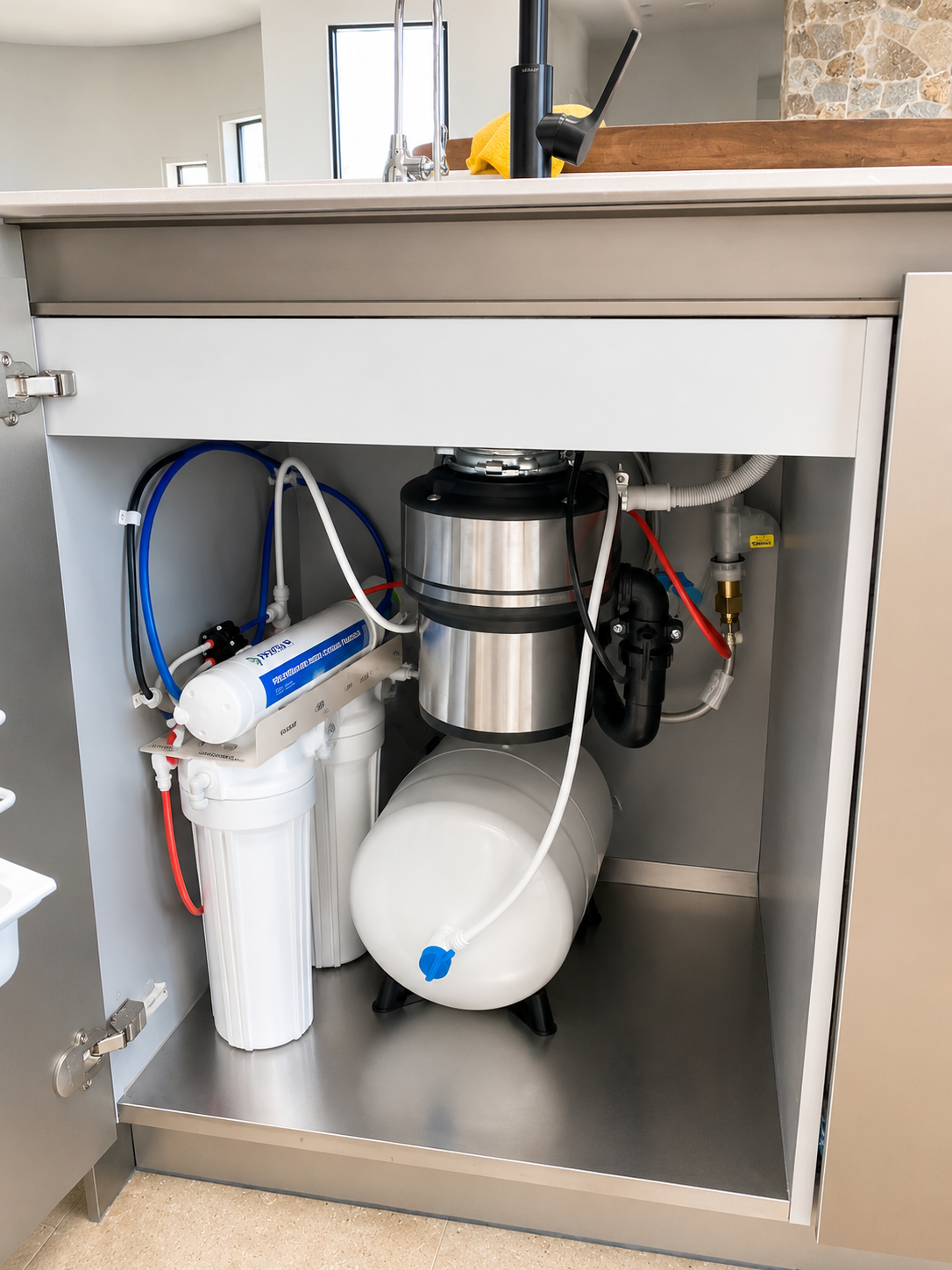
Reverse Osmosis Explained
What is reverse osmosis?
Reverse osmosis, commonly called RO, is a membrane-based water treatment process. Water is pushed through a semipermeable membrane that allows water molecules to pass while reducing many dissolved substances.
The process creates two water streams: purified RO product water, also called permeate, and a concentrate stream that carries rejected material away from the membrane.
Because RO uses membrane separation, it can address many dissolved water-quality concerns that conventional sediment or carbon filtration alone may not address.
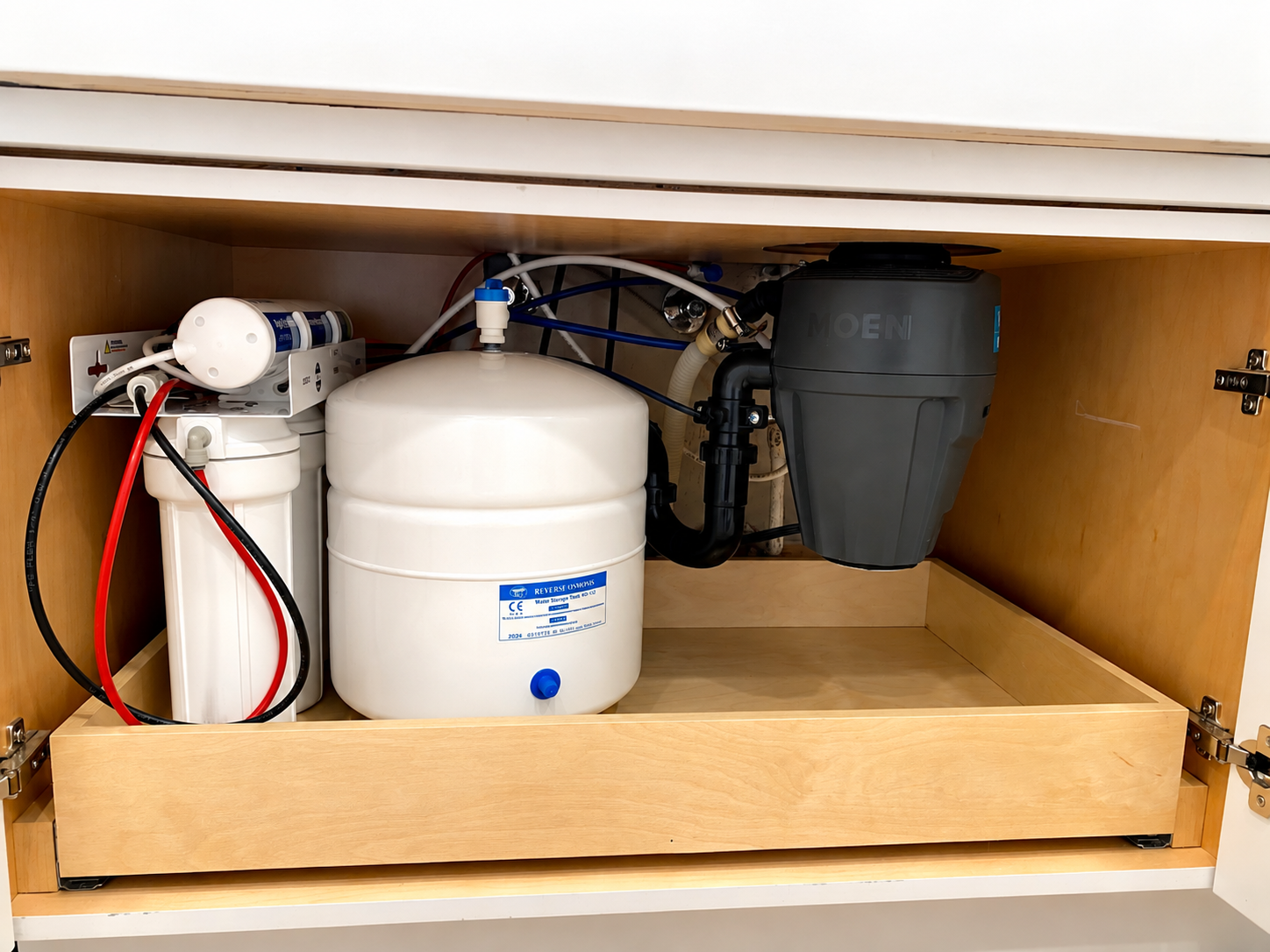
Traditional Under-Sink RO
Reverse osmosis with a pressurized storage tank.
A traditional under-sink reverse osmosis system produces purified water and stores it in a pressurized RO tank. Stored water is then available when the drinking-water faucet or connected appliance is used.
This proven configuration works well for many residential applications and can supply a dedicated drinking-water faucet as well as compatible refrigerators, ice makers, instant-hot dispensers, or water chillers.
- Dedicated purified drinking and cooking water
- Pressurized RO storage tank
- Refrigerator and ice-maker connections when appropriate
- Compatible instant-hot and chilled-water applications
- Professional-grade RO equipment
RO System Configurations
Choosing the right reverse osmosis configuration.
RO systems can be configured differently depending on available space, required water production, storage, fixture demand, and how many locations need purified water.
Under-Sink RO with Storage Tank
A conventional RO system stores purified water in a pressurized tank and delivers it when a connected faucet or appliance calls for water.
- Proven residential configuration
- Dedicated drinking-water faucet
- Refrigerator / ice-maker connection
- Compact under-sink installation
Tankless Reverse Osmosis
Direct-flow RO systems produce purified water on demand and can reduce or eliminate the need for a conventional pressurized storage tank.
- Compact configuration
- Higher on-demand production
- Modern under-sink installation
- Multiple equipment options
Centralized Reverse Osmosis
A centralized RO system produces purified water from one location and distributes it to multiple dedicated drinking-water fixtures and appliances throughout the home.
- One centralized RO source
- RO storage tank
- Multiple dedicated RO points
- Custom distribution design
Centralized RO Distribution
One RO system. Multiple purified-water points.
For homes with several dedicated RO fixtures or appliances, purified water can be produced at a centralized location, stored, and distributed to the required points.
Centralized Reverse Osmosis Configuration
The system is designed around the number and type of fixtures, expected water demand, available equipment space, storage requirements, and distribution layout.
RO Water Treatment
What can reverse osmosis reduce?
Reverse osmosis membranes can reduce many dissolved contaminants and constituents. Actual reduction depends on the membrane, system configuration, feed-water conditions, and the specific substance.
PFAS
Reverse osmosis can reduce certain PFAS compounds in drinking water. Actual performance depends on the specific PFAS compound, membrane, system design, and operating conditions.
Lead & Metals
RO membranes can reduce lead and various dissolved metals and ions, depending on membrane performance and feed-water conditions.
Nitrate
Appropriate reverse osmosis membranes can reduce nitrate in drinking-water applications.
Fluoride
Reverse osmosis membrane treatment can reduce fluoride concentration in RO product water.
Dissolved Constituents
Membrane separation can reduce many dissolved constituents that conventional sediment filtration does not address.
Total Dissolved Solids
TDS commonly decreases across a properly operating RO membrane and provides a useful measurement for evaluating membrane rejection.
Verify RO Performance
TDS helps us evaluate membrane performance.
Total dissolved solids, or TDS, is useful for comparing feed water with RO product water and evaluating membrane rejection. It is an operational measurement—not a complete contaminant analysis.
A TDS meter measures overall dissolved ionic material. It does not identify individual contaminants such as PFAS. Specific water-quality concerns require appropriate testing methods.
Post-Treatment Options
Remineralization and alkaline options.
Depending on water preference and system design, post-treatment can be added after the RO membrane.
Remineralization
A remineralization stage can add selected minerals back into RO product water after membrane treatment and can modify the finished-water taste and chemistry.
Alkaline Post-Treatment
Alkaline post-treatment can be incorporated when a customer prefers a higher finished-water pH or a particular taste profile. Final performance depends on the selected media and water conditions.
Professional RO Installation
The RO system has to work with the home.
A reverse osmosis installation involves more than mounting filtration equipment under a sink. Water supply, drainage, storage, faucet location, appliance connections, available electrical power, and future cartridge or membrane service all need to be considered.
For centralized systems, the distribution layout and the fixtures receiving RO water become part of the system design.
RO System Design
How we design your reverse osmosis system.
The right RO configuration depends on the water, expected usage, installation conditions, and the fixtures the system needs to supply.
Evaluate Water
Review feed-water conditions and treatment objectives.
Define RO Points
Determine which faucets and appliances need purified water.
Determine Demand
Estimate required production and storage based on expected usage.
Select Configuration
Choose traditional, direct-flow, or centralized RO.
Install & Verify
Install the system and verify proper operation.
Reverse Osmosis FAQ
Common questions about residential RO systems.
What does GPD mean on a reverse osmosis system?
Can reverse osmosis reduce PFAS?
Can an RO system supply a refrigerator or ice maker?
Can reverse osmosis be connected to an instant-hot dispenser or water chiller?
What is the difference between traditional and tankless RO?
What is a centralized reverse osmosis system?
Does low TDS mean the water is free of contaminants?
Can minerals be added back after reverse osmosis?
Reverse Osmosis Systems
Find the right RO system for your home.
Tell us where you want purified water and what fixtures or appliances you want to supply. We can help determine whether a traditional, direct-flow, or centralized reverse osmosis configuration fits the application.