First, is the salt use actually excessive?
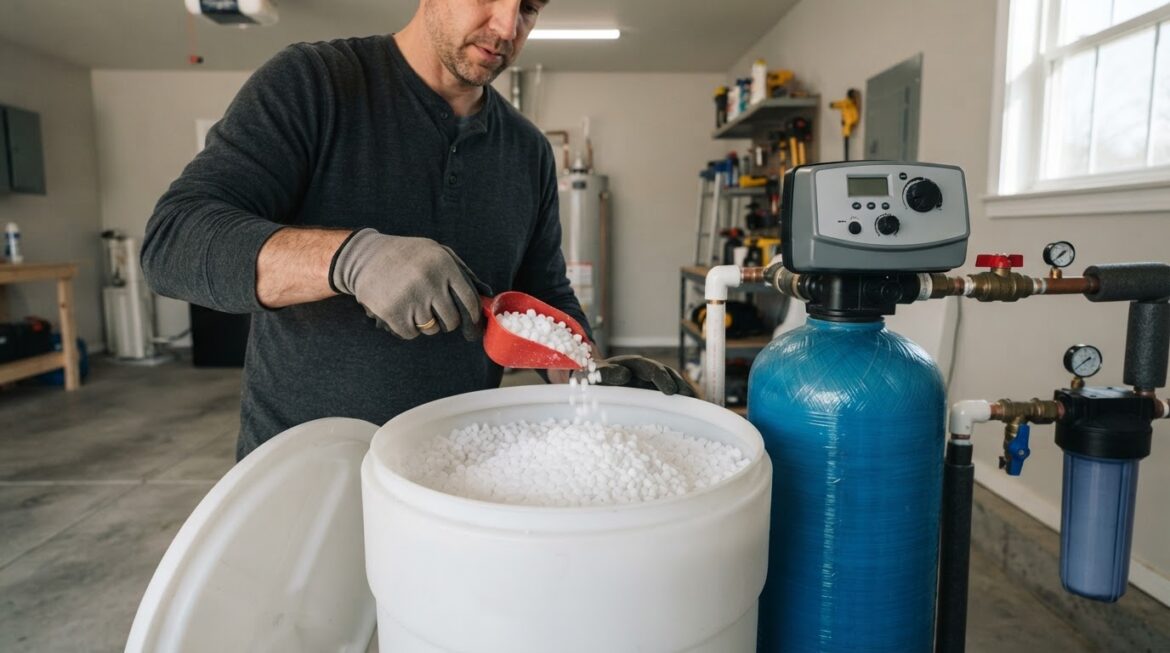
A water softener uses salt to regenerate its ion-exchange resin. The amount consumed depends on resin volume, programmed salt dose, feedwater hardness, household water consumption and regeneration frequency. Before changing settings, record how much salt you add, how often the unit regenerates and whether the treated water is meeting the hardness target.
1. The hardness setting is too high
A metered softener estimates remaining capacity using programmed hardness and measured water volume. If hardness is set much higher than the actual supply, the unit may regenerate sooner than necessary. Test the incoming water and enter a value appropriate for the controller and local conditions. If the system uses an adjustment for iron or other factors, follow the equipment instructions.
2. The salt dose is higher than necessary
Salt efficiency and maximum resin capacity are not the same. A higher salt dose can provide more capacity per regeneration but often less capacity per pound of salt. The right setting balances salt consumption, regeneration frequency and required softened-water volume. Do not reduce the dose without checking the resin size and programmed capacity.
3. The system regenerates too frequently
An incorrect capacity setting, improperly configured meter, unusually short day override or control-programming error can trigger excess cycles. Review the regeneration history and compare it with actual household usage. Some day overrides are intentional to maintain resin condition; they should not be removed without considering the equipment and water conditions.
4. A hidden leak is increasing water consumption
A running toilet, leaking fixture or continuously operating water-fed appliance can cause a metered softener to count far more water than expected. Check the water meter when no fixtures are in use, and investigate any unexpected movement. Fixing a leak can reduce both water use and regeneration demand.
5. The household is using more water
Guests, additional residents, irrigation accidentally connected to the softened line, or changes in appliance use can increase demand. Compare recent water bills and check whether exterior hose bibs or irrigation are connected to treated water. The plumbing layout matters as much as controller settings.
6. The brine system is not operating correctly
Salt bridging, salt mush, a clogged injector, incorrect refill timing, or a sticking brine component can disrupt regeneration. A malfunction does not always mean the system literally consumes more salt; sometimes it creates poor softening that prompts repeated manual regeneration. Inspect the brine tank and have the valve serviced when needed.
7. The resin or control system needs service
Fouled resin, a faulty meter, worn seals or an improperly functioning valve can reduce performance. If water remains hard after regeneration, test hardness at the inlet and outlet and verify the regeneration sequence. Replacing resin or the whole unit without diagnosis can waste money.
A practical troubleshooting checklist
Measure incoming and treated hardness with a suitable test; record regeneration dates and water usage; confirm resin size, programmed capacity and salt dose; inspect the brine tank; check for leaks; and review the installation layout. Changes should be made one at a time, followed by retesting. For a broader look at the role of softening, see our water softener service page.
Frequently asked questions
Should a softener regenerate every night? Not necessarily. The correct frequency depends on water demand and system design.
Will switching from sodium chloride to potassium chloride fix excessive regeneration? No. Regeneration frequency is primarily a settings and demand issue; potassium chloride also has different operating considerations.
Does a bigger softener always use less salt? No. Programming and salt efficiency still matter.
Can a softener use salt but leave water hard? Yes. Brine, valve, resin or programming problems may be involved.
Need help diagnosing salt consumption?
Pro Filtration Water Systems provides customized water softening solutions in Orange County. Contact us for an assessment of your water hardness, settings and system performance.
Leave a Reply