
Aeration Water Treatment Systems
Air and water, engineered to work together.
Aeration water treatment brings air and water into contact to help oxidize dissolved iron and, under suitable conditions, manganese. It may also reduce hydrogen sulfide odors through gas transfer or oxidation. A properly designed filtration stage then removes precipitated solids.
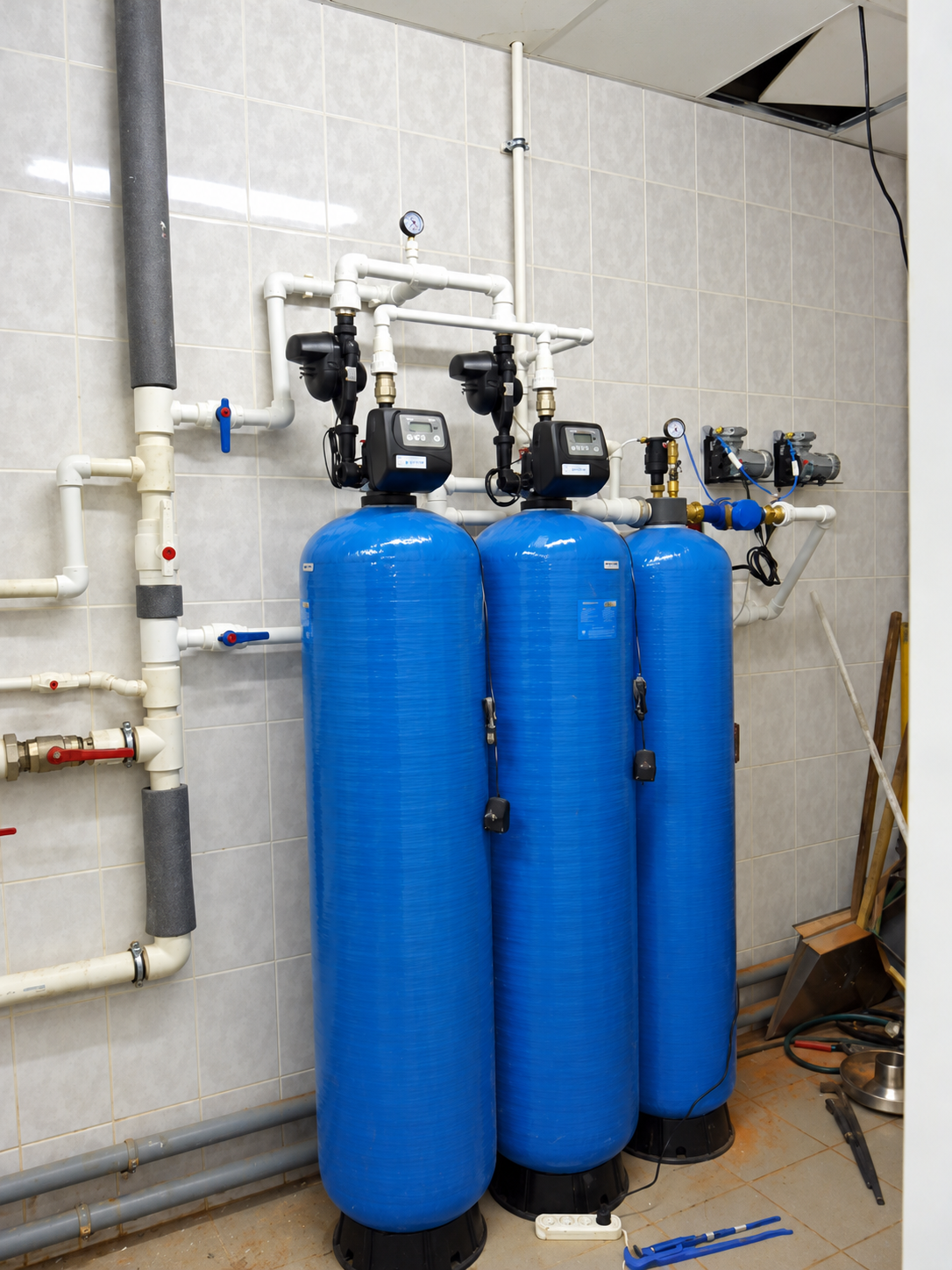
Oxidation makes some dissolved contaminants easier to separate. Aeration is typically a pretreatment step—not a substitute for appropriately sized downstream filtration.
How aeration works
The treatment sequence is straightforward in principle. Performance depends on the actual water chemistry, air contact, hydraulic conditions, and filtration equipment.
Introduce air
Water is brought into contact with air to increase the availability of oxygen. The mixing method and contact arrangement depend on the system design.
Promote oxidation
Under suitable conditions, dissolved iron and manganese can form particles. Hydrogen sulfide may be oxidized or reduced through air stripping in some designs.
Filter and remove
Appropriate downstream filtration captures precipitated material. Media selection, service flow, and backwash capacity are essential to reliable operation.
When aeration makes sense
Aeration is particularly relevant for certain groundwater supplies and specialty water-treatment applications where dissolved contaminants can be addressed through oxidation or gas transfer.
Iron
Dissolved iron may cause rusty staining, discoloration, and deposits as it oxidizes. Aeration can help prepare it for removal by the following filter.
Manganese
Manganese can contribute to dark staining and deposits. Its oxidation may require particular pH, contact-time, or media conditions.
Hydrogen sulfide
Hydrogen sulfide is associated with a rotten-egg odor. Depending on water chemistry and system design, aeration may help reduce this dissolved gas.
Important: Aeration does not treat every water-quality problem. It is not a substitute for softening, reverse osmosis, or other treatment processes when those are required. Water testing determines whether it belongs in the treatment plan.
The complete system matters.
Adding air alone does not guarantee clean water. Pro Filtration evaluates how aeration interacts with the upstream supply, downstream filtration, household or facility demand, and the plumbing installation.
From source water to treated water
Conceptual example only. Actual configurations vary by contaminant levels, treatment goals, and site conditions.
Designed for the water supply—not a one-size-fits-all product.
For Orange County homes, private wells, specialty supplies, and commercial facilities, aeration should be selected only when the source-water analysis and treatment goals justify it. Typical municipal-water concerns may call for entirely different solutions.
Aeration water treatment FAQs
Straight answers to common questions about aeration, iron removal, odors, and choosing the right treatment process.
What is aeration in water treatment?
Aeration brings water into contact with air. Depending on water chemistry and equipment design, it supplies oxygen for oxidation and can help release certain dissolved gases. It is commonly followed by filtration.
How does aeration help remove iron from water?
Oxygen can convert dissolved ferrous iron into solid ferric particles when pH and contact time are suitable. A downstream filter captures those particles. Aeration alone does not remove the precipitated solids.
Does aeration remove manganese?
It can help in certain systems, but manganese is often more difficult to oxidize than iron. Treatment may require higher pH, specialized catalytic media, added oxidants, or another design based on test results.
Can aeration eliminate rotten-egg water odor?
Aeration may reduce odors caused by dissolved hydrogen sulfide through air stripping or oxidation. Effectiveness depends on concentration, pH, contact conditions, ventilation, and any downstream treatment.
Does an aeration system soften hard water?
No. Aeration does not meaningfully remove dissolved calcium and magnesium responsible for water hardness. A properly designed water softener is typically used when hardness reduction is the goal.
Do Orange County homes need aeration systems?
Not routinely. Aeration is mainly considered when water testing identifies a suitable treatment problem, such as dissolved iron or hydrogen sulfide in a private well or specialty source. Municipal water often has different treatment needs.
Let’s design around your water.
From initial water analysis to equipment sizing and system integration, we design treatment solutions around your water quality, plumbing layout, and operating requirements.